
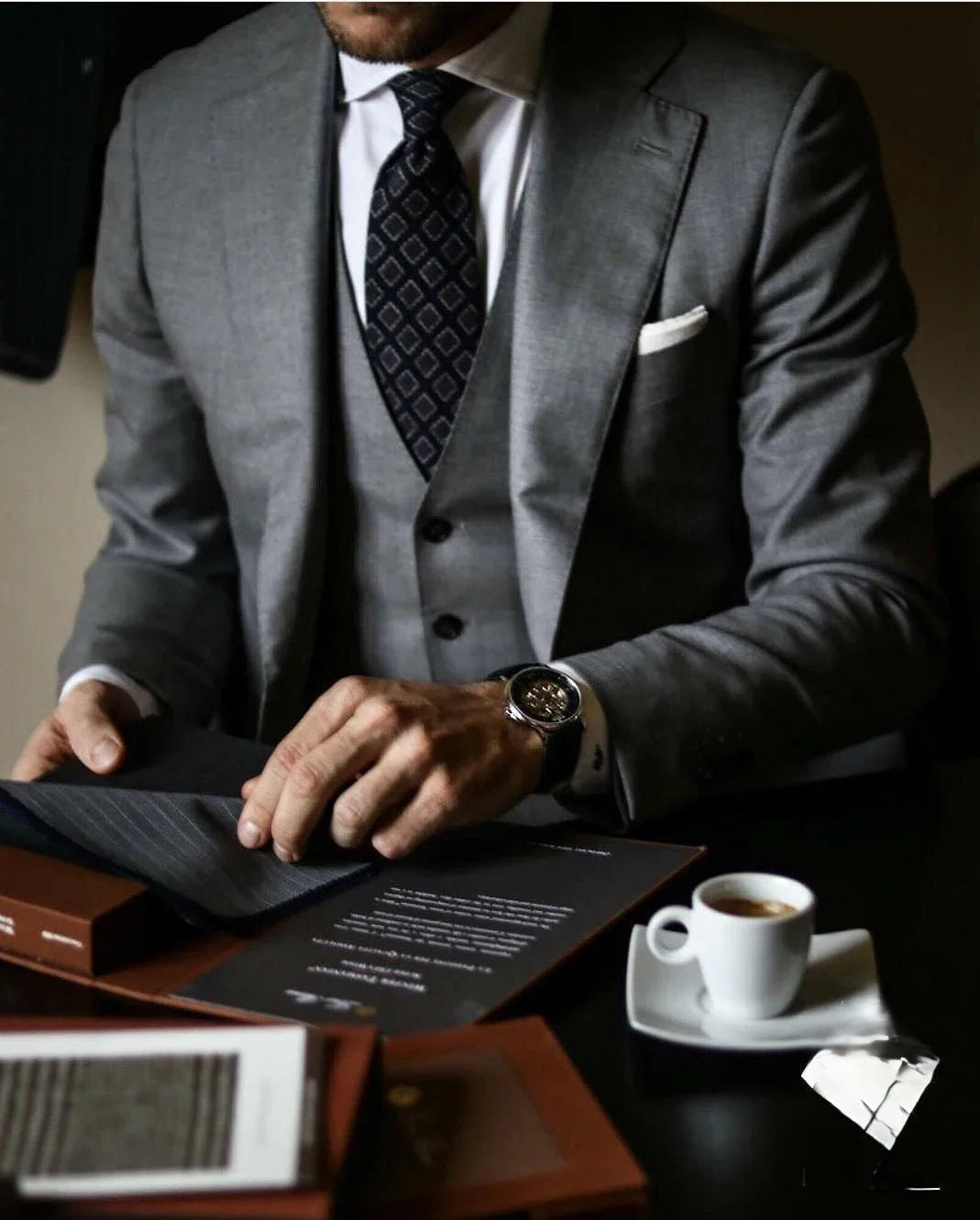
Why Quality and Uniqueness Matter in Men’s Luxury Fashion
IN SHORT
Learn how to judge quality menswear, build stronger complete looks and develop a distinctive wardrobe around fit, proportion, versatility and real-life use.
There is a point in a man’s wardrobe where buying more stops being the answer.
You can own several shirts, multiple pairs of shoes and more than one suit, yet still feel that something is missing when you dress. The problem is often not quantity. It is that the pieces do not work together, the fit is inconsistent, or the wardrobe does not reflect the man wearing it.
That is where quality and individuality begin to matter. Not as luxury slogans, but as practical standards. A good piece should sit well on your body, feel right for the occasion, combine naturally with what you already own and make dressing easier rather than more complicated.
At Infynite, we think of luxury menswear this way: fewer weak decisions, stronger complete looks, and clothes that help you carry yourself with confidence.
Quality is something you should be able to see and feel
A label can tell you who made an item. A price can tell you what someone is asking for it. Neither automatically tells you whether the piece is right for you.
Start with the things you can actually judge.
1. Fit
Fit is the first filter because even an attractive garment loses its impact when the proportions are wrong. On a suit jacket, look closely at the shoulders, chest, sleeve length and overall jacket length. The jacket should follow your frame without pulling, collapsing or hanging like borrowed clothing.
With shirts, check the collar, shoulder seam and torso. A shirt should give you room to move without leaving so much fabric that the outfit loses shape. With trousers, the waist, rise, thigh and break all affect how polished the final look feels.
This is why two men can wear similar clothing and create very different impressions. The difference is often not the brand. It is proportion.

2. Finish
Look beyond the first impression. Check whether seams sit cleanly, whether buttons and closures feel secure, whether the garment hangs evenly, and whether the overall construction looks deliberate.
For shoes, look at the shape, finishing and how the pair works with the trousers you already wear. For accessories, check whether the detail adds polish or simply adds noise.
Quality is often quiet. It shows itself in how well the item continues to look after the initial excitement of buying it has passed.
3. Comfort
A good wardrobe has to survive real life. Sit down in the jacket. Walk in the shoes. Move your arms in the shirt. Wear the trousers for more than five minutes.
If a piece constantly needs adjusting, pinches when you move, or makes you overly conscious of what you are wearing, it will rarely become a dependable part of your wardrobe.
The strongest purchase is the one that improves several outfits
One of the most expensive habits in menswear is buying each piece in isolation.
A jacket may look impressive by itself but become difficult to wear because you own no trousers or shoes that work with it. A bold shirt can feel exciting in the shop and then spend most of its life untouched because it does not fit into your normal week.
Before buying, ask one practical question:
What can I wear this with immediately?
If the answer includes several pieces you already own, the purchase is beginning to earn its place.
A versatile suit becomes more useful when it works with several shirts, more than one pair of shoes and different ties. A pair of chinos becomes stronger when it can move from a shirt and loafer combination during the week to a polo or knit at the weekend.
That is the principle behind building complete looks. You are not simply asking whether one product is good. You are asking what the product makes possible.
Uniqueness does not mean dressing loudly
Many men hear the word “unique” and immediately think of bright colours, unusual prints or statement pieces. Personal style can include those things, but it does not depend on them.
For a mature wardrobe, individuality often appears in repetition.
You may consistently prefer structured shirts. You may feel most like yourself in loafers rather than sneakers. You may favour navy, charcoal, brown and muted earth tones. You may use ties, belts or pocket details to bring personality into otherwise restrained looks.
Over time, those repeated decisions become your style.
The goal is not to make every part of the outfit interesting at once. When everything competes for attention, nothing feels considered. Let one element carry character while the rest of the look creates balance.

A striped shirt, for example, can be the point of interest. Pair it with a calmer trouser and restrained footwear. A detailed loafer can lead the outfit while the shirt and trouser remain clean. A stronger tie works best when the suit and shirt give it room to be noticed.
Buy for the man you are during the week
A useful wardrobe should understand your calendar.
For many men in Nairobi, the same week can include a work meeting, an evening dinner, a wedding, a social function and a relaxed weekend. That means your wardrobe needs range, but it does not need chaos.
If most of your week is professional, build strength around shirts, trousers, dependable shoes and versatile tailoring. If weddings and social functions are a regular part of your calendar, make sure you have complete looks that feel considered without requiring a completely new purchase for every invitation.
If weekends are important, do not treat casual dressing as the place where standards disappear. Well-fitting denim, chinos, polos, casual shirts, knitwear and loafers can create relaxed looks that still feel intentional.
This is where quality becomes practical. The pieces you wear often deserve serious attention because they shape how you present yourself repeatedly.
Six questions to ask before buying menswear
- Does it fit me well now? Buy for your current body, not the body you hope to have later.
- Does the proportion suit my frame? Length, width and balance matter as much as size labels.
- Can I build at least three outfits with it? A strong piece should create options.
- Is it comfortable enough for the occasion? You should be able to move, sit and spend time in it naturally.
- Does it improve something I already own? The best additions often unlock neglected pieces already in your wardrobe.
- Am I buying it because it suits me, or only because it caught my attention? There is a difference between attraction and usefulness.
These questions do not remove emotion from shopping. They make the emotion more intelligent. You can still choose something because you love it, but you understand why it belongs in your wardrobe.
Good shoes can change the level of the whole outfit
Footwear is one of the clearest examples of how a single decision affects the complete look.
The same trouser and shirt can feel more formal with a dress shoe, more relaxed with a loafer, and more casual with a clean sneaker. This is why buying shoes only by appearance can create wardrobe gaps.
Think about where the shoe sits in your rotation.
Do you need something for business and formal events? Are you looking for a loafer that can move between chinos, denim and tailored trousers? Do you need a pair that finishes evening looks without making them feel too formal?

Our men’s dress shoes guide goes deeper into the difference between Oxfords, Derbies and loafers, while our loafers guide for men in Kenya explains how to choose and style loafers across different occasions.
Build the wardrobe from the middle, not from the extremes
Most men do not struggle because they lack a tuxedo or a statement jacket. They struggle in the middle: the ordinary workday, the dinner that is not fully formal, the weekend that still matters, the wedding where they want to look sharp without dressing like the groom.
That middle is where a well-built wardrobe pays for itself.
Start with pieces that can move between settings. A strong shirt collection. Trousers that work with more than one type of shoe. A blazer that can sit over formal and smart-casual looks. Shoes that cover clear levels of formality. Accessories that change the mood without forcing you to rebuild the outfit.
If you often find smart casual difficult, read our Smart Casual for Men in Kenya guide. It shows how shirts, chinos, blazers, loafers and clean sneakers can work together without making the outfit feel forced.
When should you spend more?
Price should not be the starting point, but there are categories where a stronger investment can make sense when the piece is likely to work hard.
A suit you can restyle repeatedly, a dependable pair of shoes, trousers you reach for every week, or a shirt that works across business and social settings may justify more attention than a highly specific item you will only wear once or twice.
Think in terms of use, not only ownership.
A piece that looks good, fits well and removes indecision every time you wear it is delivering value long after the payment is forgotten.
What luxury should feel like
Luxury should not make dressing more stressful.
It should feel like certainty.
You know the jacket sits properly. You know the trouser length works. You know the shoe belongs with the outfit. You know which shirt changes the mood. You know what to add when the occasion becomes more formal and what to remove when it becomes more relaxed.
That confidence is more useful than owning a wardrobe full of impressive pieces that do not speak to one another.
For a broader view of this approach, read Luxury Men’s Fashion in Kenya: How to Dress with Intention and our Capsule Wardrobe for Men in Nairobi guide.
Frequently asked questions
How can I tell whether menswear is good quality?
Start with fit, proportion, comfort and finishing. Check how the garment sits, whether seams and closures look clean, how it moves with your body and whether it works with the rest of your wardrobe.
Does expensive clothing always mean better quality?
No. Price can reflect many things. A piece still needs to fit well, feel comfortable, suit your lifestyle and integrate with the wardrobe you already own.
How do I make my style more distinctive?
Build consistency rather than chasing novelty. Repeat the colours, shoe styles, trouser shapes, shirt patterns and accessories that genuinely suit you. Personal style becomes recognisable through deliberate repetition.
What should I improve first in my wardrobe?
Start with the category that causes the most indecision. For many men, that means shirts, trousers and shoes first, then tailoring and accessories. Strengthening the foundation makes the rest of the wardrobe easier to build.
The real measure of a strong wardrobe
A wardrobe is working when getting dressed becomes easier.
You can see combinations quickly. Your clothes fit the life you actually live. Your stronger pieces have enough calm around them to stand out. Your shoes, shirts, trousers and tailoring support one another rather than competing for attention.
That is where quality and uniqueness meet: not in owning the most, but in choosing with enough intention that the final look feels naturally yours.
Explore Infynite’s suits, shirts, chinos, men’s shoes and accessories to build complete looks around the way you actually dress.


